


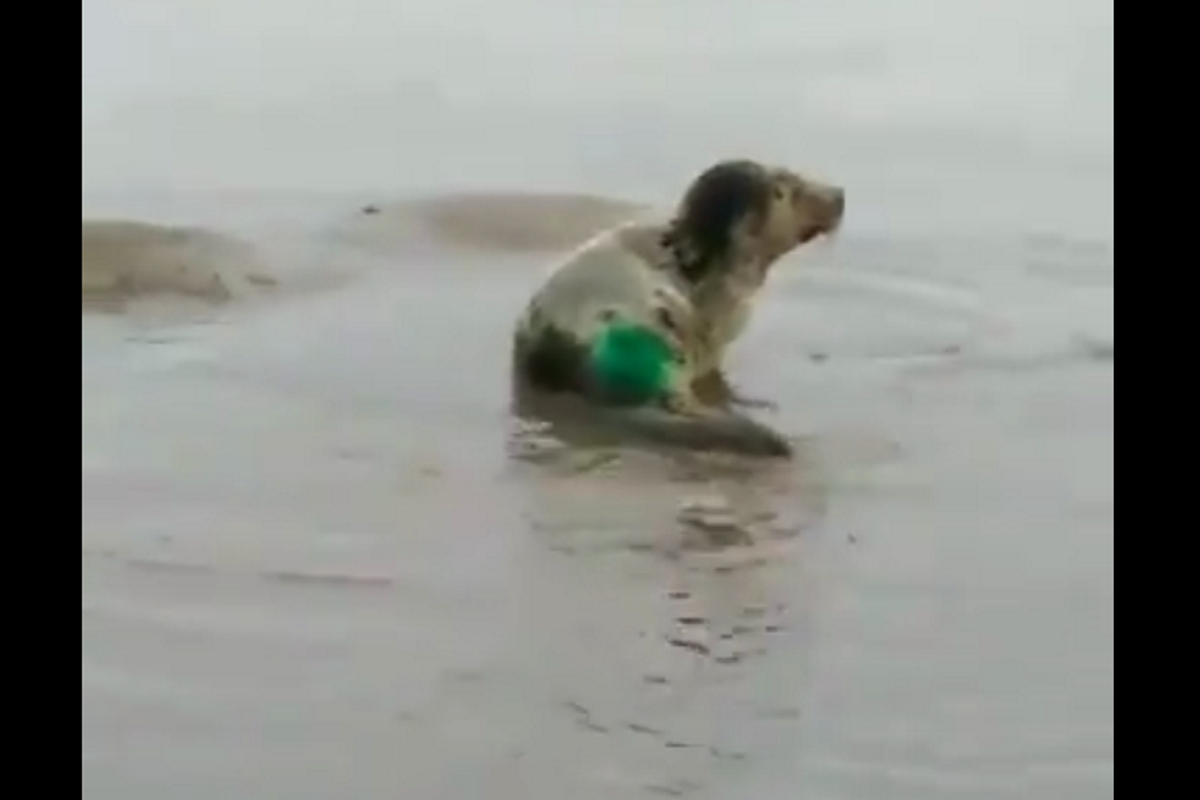
Some good news for the end of the week.
Earlier this week we told you about a seal who was rescued in Whitby after reports that it had been attacked by a man and his dogs.
We can end the week with the news that the seal was fine and is now back at sea.
Sally Bunce is the Whitby Medic for the British Divers Marine Life Rescue Service, she attended to the animal and says it made it back to the water.
Sally says the seal had been in Whitby for a few days, she says they often rest on the beach and usually don't need assistance getting back to the sea. Sally says the animals are best left alone and that if a seal does appear to be in distress the calling for expert intervention is always the best course of action.
The advice from the BDMLR is that
If you find a seal on a beach, you should watch it from a distance. Do not approach the animal. Seals regularly haul out on our coasts – it is part of their normal behaviour and, in fact, they spend more time out of the water, digesting their food and resting than in it. Therefore, finding a seal on the beach does not mean there is necessarily a problem and do not chase it into the sea as this may stop it from doing what it needs to do – rest. A healthy seal should be left alone.
Do not approach a seal, or allow children or dogs near it. Seals are wild animals and although they look cute, they will defend themselves aggressively if necessary.
After stormy weather and / or high tides, seals will haul out on beaches to rest and regain their strength. Many do not need first aid, but we will always try to find someone to check them out just in case.
However, if there is a problem, there are a number of things you may see:
- Abandoned: If you see a seal with a white, long-haired coat in the autumn/winter (like the picture above), or you see a small seal (less than a metre (three feet) in length) alone between June and August, then it is probably still suckling from its mother. Check the sea regularly for any sign of an adult seal.
- Thin: Signs of malnutrition include visible ribs, hips and neck and perhaps a rather baggy, wrinkled skin.
- Sick: Signs of ill health include: coughing, sneezing or noisy, rapid breathing and possibly thick mucus coming from the nose, wounds or swellings, particularly on flippers, cloudy eyes, or thick mucus around them, or possibly one eye kept closed most of the time. A seal showing little response to any disturbance going on around it (although remember they could be soundly asleep) could also be a sign of ill health.
- Entanglement: Seals are susceptible to being entangled in fishing gear and other debris. heavy commercial gear will be obvious, but monofilament nets and line is hard to see, but could be caught around the neck, flippers and body. Sometimes seals can have nasty wounds due to fishing gear and marine debris cutting into their bodies.
If you see a seal that may be abandoned, thin, ill or injured, then call for advice and assistance:
BDMLR RESCUE HOTLINE: 01825 765546 (24hr)
or
RSPCA hotline (England & Wales): 0300 1234 999

 North Yorkshire Police Hail Biggest Operation in Force's History
 Scarborough Parks Secure Platinum Accolades In Regional Horticulture Awards
 Man Arrested After East Riding Road Rage Incident
 Scarborough Athletic Face Near Eight-Hour Round Trip To Brackley
 Yorkshire Coast Derby Awaits As Bridlington Town Face Whitby Town In FA Trophy
 Yorkshire Coast Rugby Kicks Off
 Eastfield School Celebrating After Sporting Boost
 Pickering Town Hoping For Six Unbeaten
 Scarborough's Reform UK Mayor Backs 'Courageous' RNLI Following Abuse Reports
 Hospitality Businesses Push MP For VAT Reduction Ahead Of Autumn Budget
 Deliberate Fires Surge Across North Yorkshire After Exceptionally Dry Summer
 Experts Say Flat Rate Visitor Levy Offers Simplest Solution for North Yorkshire










Comments
Add a comment